An AI-generated website can look ready for customers before anyone has decided which customers it should attract. The photos fit. The buttons line up. The headline sounds confident. Then you read it and realize it could describe almost any business in your industry.
For a service business, that is where the real website work begins.
If you are comparing an AI website builder with custom web design, look beyond how quickly each can produce a homepage. Ask who will decide what the site needs to accomplish, verify what it says, and make sure a potential customer can take the next step.
AI can help with the build. Someone still has to own the decisions.
Where AI can help
AI tools can help explore layouts, organize rough notes, draft copy, and assist with code. For a business that needs a simple starting point and has someone willing to review and maintain it, an AI-assisted website can be a reasonable option.
I would not dismiss a website just because AI helped create it. I would ask the same questions I ask of any website: Is the information accurate? Does it fit the business? Is it useful on a phone? Does the contact form work?
The shortcut becomes expensive when the business owner assumes those questions were answered because the preview looks finished.
Start with the business before choosing the layout
A useful website plan starts with specific decisions. Which services do you want more inquiries about? Where do you actually work? What makes a customer a good fit? What do people need to know before they call?
Consider an HVAC company that wants more heat pump installation work. A homepage saying “comfort solutions you can trust” leaves plenty unanswered. Buyers may need information about replacement versus repair, installation requirements, service coverage, and how to request an assessment.
That example is hypothetical, but the decisions are practical. They determine which pages belong on the site, what those pages should explain, and how visitors move between them.
Before design begins, I want to establish:
- The priority: the services and inquiries the business wants to grow.
- The page plan: where each important customer question will be answered.
- The evidence: real projects, qualifications, photos, and details that support the claims.
- The next step: a clear route to a call, estimate request, or booking.
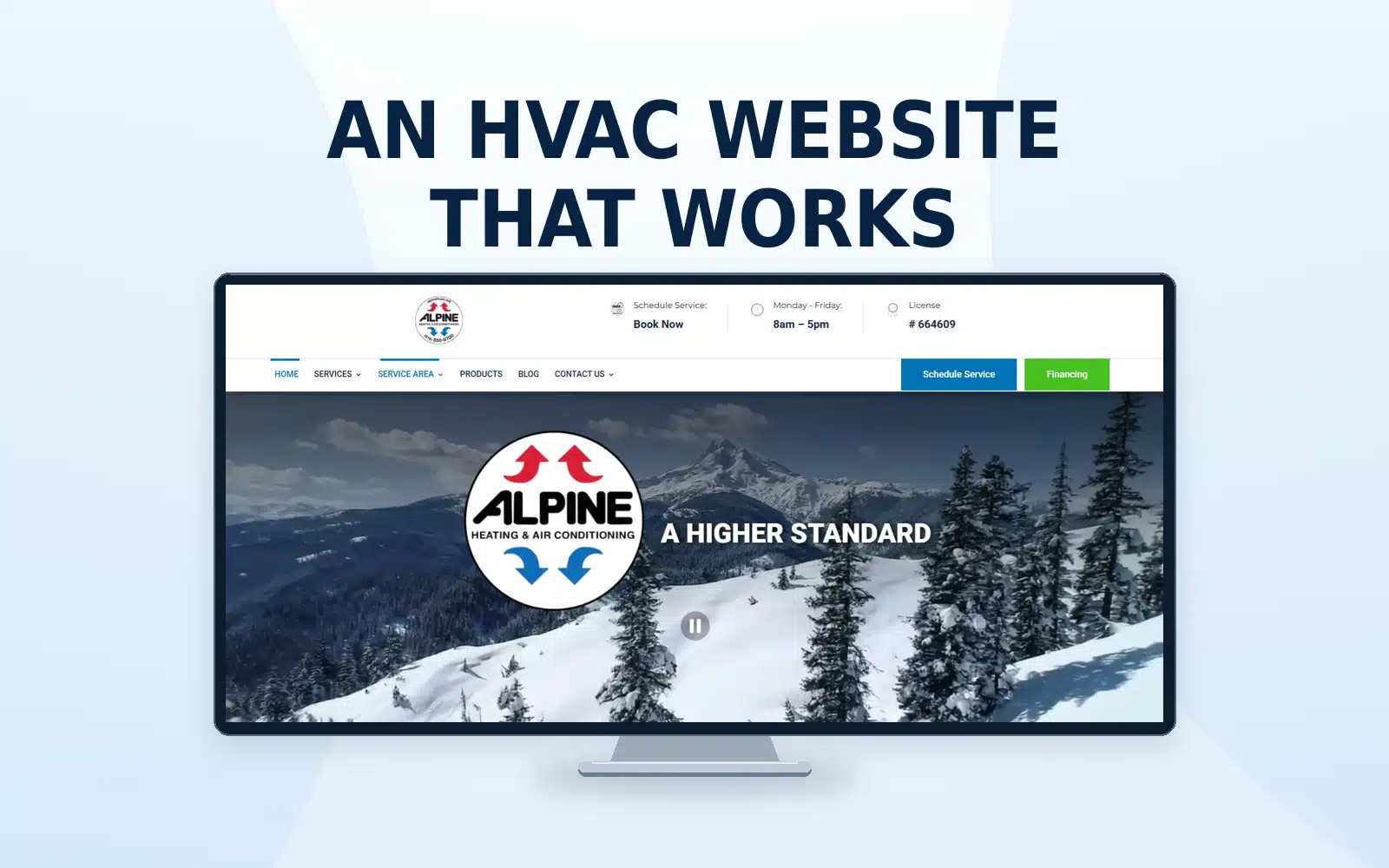
You can see specific service-navigation and content decisions in my Alpine HVAC website walkthrough. A real project gives you more to evaluate than a polished mockup.
Google is not banning websites because AI helped build them
Be cautious if a website sales pitch starts with that claim. Google's guidance on AI-generated content says appropriate AI use is not against its guidelines. That is different from saying every AI-generated page deserves to rank.
Its current guidance calls for manual fact-checking and review before publication, including titles, descriptions, structured data, and image alt text. Its scaled content abuse policy addresses pages produced at scale primarily to manipulate rankings rather than help users, regardless of how they are created.
For your business, the practical concern is whether the site publishes accurate, useful information. An invented certification, a service you do not offer, or a copied city page needs attention whether a person or a tool produced it.
Google also says foundational SEO remains relevant to its generative AI search features. Buying an AI-built website does not automatically make your business more visible in AI answers. Buying custom design does not guarantee that visibility either.
SEO helps search engines access and understand your pages. AEO focuses on answering buyer questions clearly. GEO considers visibility in generative AI responses. These goals overlap. In a website proposal, the labels should lead to specific work on your homepage and service pages.
That includes accurate service coverage, useful answers, and evidence such as original project photos, relevant qualifications, genuine reviews, and explanations of real work. Google's E-E-A-T guidance emphasizes experience, expertise, authoritativeness, and trustworthiness. Those ideas can help evaluate credibility. They are not a numerical score you buy or a switch a developer turns on.
Ask for evidence behind the presentation
A website preview shows appearance. It does not prove that the pages can be indexed, the mobile navigation is usable, or inquiries reach the right inbox.
Ask to see an actual completed project. Have the builder explain the page structure, show the contact path, and describe what was tested. If they claim a site increased leads, ask what was measured and over what period. A screenshot without that context cannot establish the result.
Your own website needs honest evidence too. Use real project photos and accurate descriptions. Do not let generated reviews, invented team members, or unsupported promises slip into a draft because they make a section look complete.
What custom web design should include
When you hire me at Blue Frog, you work directly with the person building the website. I plan the structure and content around the business, then build the pages to support that plan.
The proposal should make the scope clear: who supplies and checks content, which pages are included, how mobile layouts and forms are tested, what search foundations are covered, and what happens after launch. Discuss account ownership, access, and ongoing costs before you commit.
I use Divi as a building tool. The value is in the decisions and implementation, not an automatic ranking advantage from a particular builder.
A custom project should also begin with an honest assessment of what you already have. If your current site has a sound foundation, targeted improvements may be enough. My guide to redesigning a website versus improving it walks through that choice.
Decide who owns the work after launch
Services change. Forms need checking. Customer questions reveal gaps in the content. Search data can show which pages deserve closer attention.
Before buying, ask who handles those changes and how the work will be prioritized. A launch date gives the project a finish line, but your business will keep moving.
For ongoing work, my Organic Growth Partnership provides a separate path for continued optimization. That should be a deliberate decision, with clear scope, rather than something you discover your website needs after the handoff.
Choose the plan you can explain
If an AI-assisted site meets your needs and you have a capable person responsible for it, that may be the right choice. If you need help deciding what to build and making the pieces work together, look closely at the strategy and accountability included in a custom project.
Ready to discuss a build? Request a website quote and tell me what the site needs to do for your business. If you are evaluating an existing site first, request a free SEO audit.
Frequently asked questions
Can an AI website builder work for a small service business?
Yes, it can be a reasonable option for a simple site when someone can verify the content, test the customer experience, and maintain it. The right choice depends on the business's requirements and who will own the work.
Will Google penalize my website just because it uses AI?
No. Appropriate use of AI is not against Google's guidelines. Accuracy, usefulness, and compliance with spam policies still matter. Generating pages primarily to manipulate rankings can violate those policies regardless of whether people or AI create them.
What should I ask before paying for custom web design?
Ask who plans the pages, checks the content, builds and tests the site, manages account access, and handles changes after launch. Get the included deliverables, ongoing costs, and responsibilities in writing. Ask to see real completed work.
Does a custom website automatically rank better than an AI-built website?
No. The custom label or choice of website builder does not guarantee rankings. Evaluate the actual page quality, technical implementation, business relevance, and customer experience instead of assuming the production method determines the result.